The Canonization of Our Lord and Savior, Dolly Parton
On August 25, 2026, Dolly Rebecca Parton died at the age of 80.
There are some deaths that feel impossible to write about because the person who died had become so permanently woven into the fabric of the world that you forgot there could ever be a version of it without them.
Dolly Parton was one of those people.
For those who have spent any amount of time in or around The First Church of Heaux, you have undoubtedly heard us refer to her by her full ecclesiastical title: our lord and savior, Dolly Parton. Usually with a straight face. Occasionally with a hand over the heart. Always with complete sincerity disguised as a joke.
Yes, obviously, the title is ridiculous. We are The First Church of Heaux. Our theology has never been particularly burdened by ecclesiastical restraint. If there were stained-glass windows in this church, at least one of them would feature a woman with six-inch acrylics, a platinum wig, and tits pushed approximately three inches from the face of God.
But here’s the thing: the joke was never the reverence. The joke was simply the language we used to express it.
Dolly Parton spent 80 years on this earth quietly demonstrating a philosophy of life that we have always found remarkably worthy of reverence. Figure out who you are, and do it on purpose. Own what you create. Know what you’re worth. Never mistake humility for making yourself smaller. Remember where you came from. If you have more than you need, look around for somebody who doesn’t have enough. Believe whatever you believe, but if those beliefs make you crueler instead of kinder, you have catastrophically missed the fucking point. Love people. Help people. Learn when you’re wrong. Make beautiful things. Say difficult things beautifully enough that people are willing to hear them. And never, under any circumstances, allow somebody else’s definition of respectable to determine how much rhinestone is appropriate.
Upon examination of the evidence, The First Church of Heaux has therefore concluded that we were not being hyperbolic. If anything, we may have been underselling her.
THE BOOK OF LOCUST RIDGE
Before Dolly Parton became The Dolly Parton, she was Dolly Rebecca Parton, born January 19, 1946, in the mountains of East Tennessee. She was the fourth of twelve children, which, for anyone doing the math, is eleven siblings. She grew up in a one-room cabin on Locust Ridge in Sevier County, Tennessee, in a family rich in music, storytelling, faith, and love, and very little else that could be deposited into a bank account.
Poverty wasn’t part of Dolly’s carefully manufactured origin story, it was her origin; and throughout her career, she never sanitized it. She talked about the crowded house, the hand-me-downs, the lack of money, the hard work, the embarrassment that sometimes accompanied being poor, and the ingenuity required when a family had almost nothing and still needed to make something out of it.
Later, when Dolly became extraordinarily wealthy, she could have quietly filed all of that under Before I Was Important. She didn’t. She wrote about it. She sang about it. She built businesses in the region. She employed people there. She poured money back into it. She made the mountains part of her identity when an entertainment industry might very well have preferred that she sand off the accent, tone down the hair, abandon the hillbilly associations, and become something more polished.
Dolly’s answer, delivered over the course of roughly seven decades, was always: No.
She did not become successful by escaping where she came from. She became successful while dragging where she came from onto the world stage, and demanding that the world recognize its beauty. That distinction is the beginning of the entire Gospel, because Dolly Parton’s life was not really a story about escaping poverty. It was a story about refusing to let poverty determine the value of the people who lived inside it.
THE BOOK OF BOOKS
Dolly’s father, Robert Lee Parton, was a farmer and construction worker. By Dolly’s account, he was also one of the smartest people she knew. But he couldn’t read or write.
That fact mattered deeply to her, because she understood that intelligence and education are not synonymous. Her father’s inability to read did not mean he lacked intelligence, ambition, or worth, it meant he had been denied a tool; Dolly understood what that denial had cost him.
So in 1995, Dolly Parton founded the Imagination Library. The original idea was beautifully uncomplicated: give children books. That’s it. Don’t wait until they’re struggling in school. Don’t make their parents prove they deserve them. Don’t make a five-year-old responsible for the economic circumstances of the adults raising them. Put books in children’s homes. Let them see their own names on packages. Let reading become something exciting. Let a child build a library before they’re old enough to really understand what the word library means.
The program began in Sevier County. Then it grew, and grew, and grew. Eventually, millions of children across multiple countries were receiving free, age-appropriate books every month. By the time Dolly died, the number of books distributed had crossed 304 million.
Three hundred and four million books.
And Dolly’s father got to see the beginning of it. Before he died, he told his daughter that the Imagination Library was probably the most important thing she had ever done. Imagine being Dolly Parton and hearing that. Imagine having written songs known around the world. Imagine the awards, the records, the movies, the businesses, the fame, the money, the costumes, the buildings with your name on them. And your daddy looks at all of it and says: the books. The books are the most important thing.
Dolly later said she could hardly express what that meant to her, because she had created the program in tribute to him. Her father couldn’t read, so his daughter put hundreds of millions of books into children’s hands.
This is the first miracle in the Canon of Dolly: she took something that had hurt someone she loved and built a door through it so millions of children would not have to encounter the same wall.
That is why we call her our lord and savior.
THE GOSPEL OF TOO MUCH
There is another piece of Dolly theology that cannot be separated from the rhinestones. Dolly Parton was too much. Deliberately. Professionally. Gloriously.
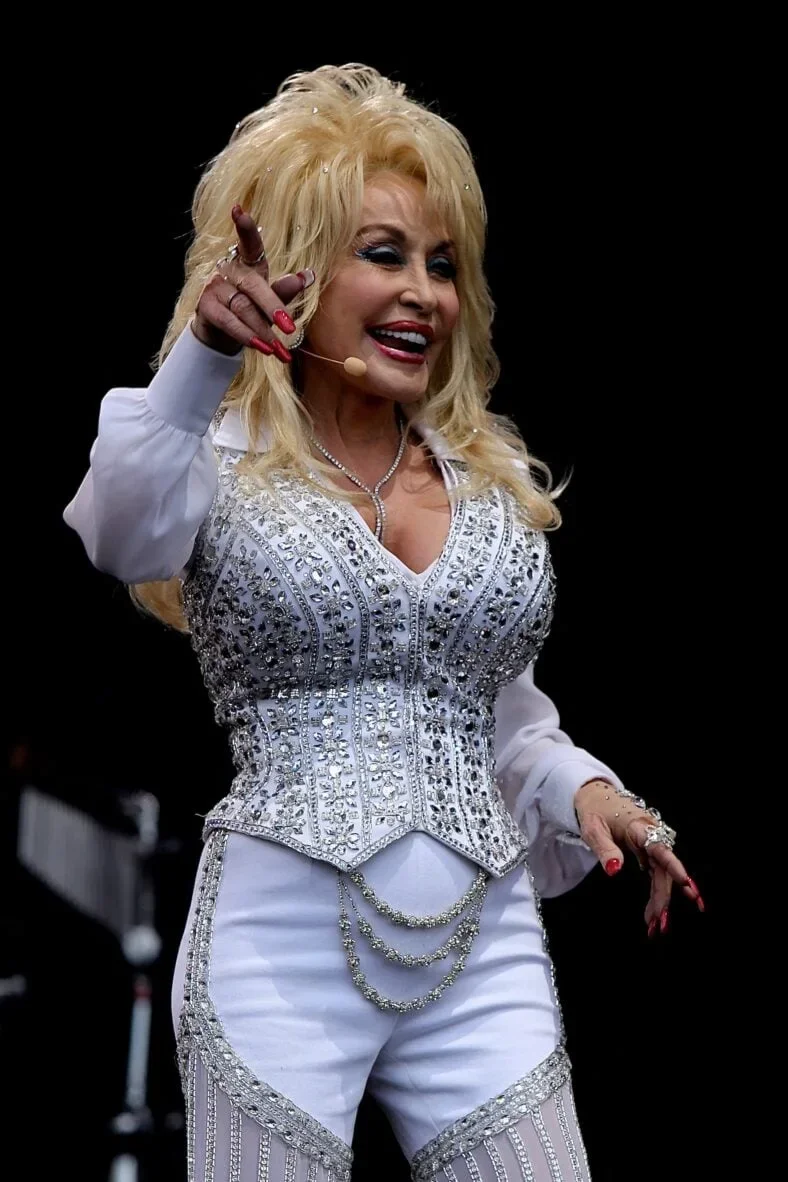
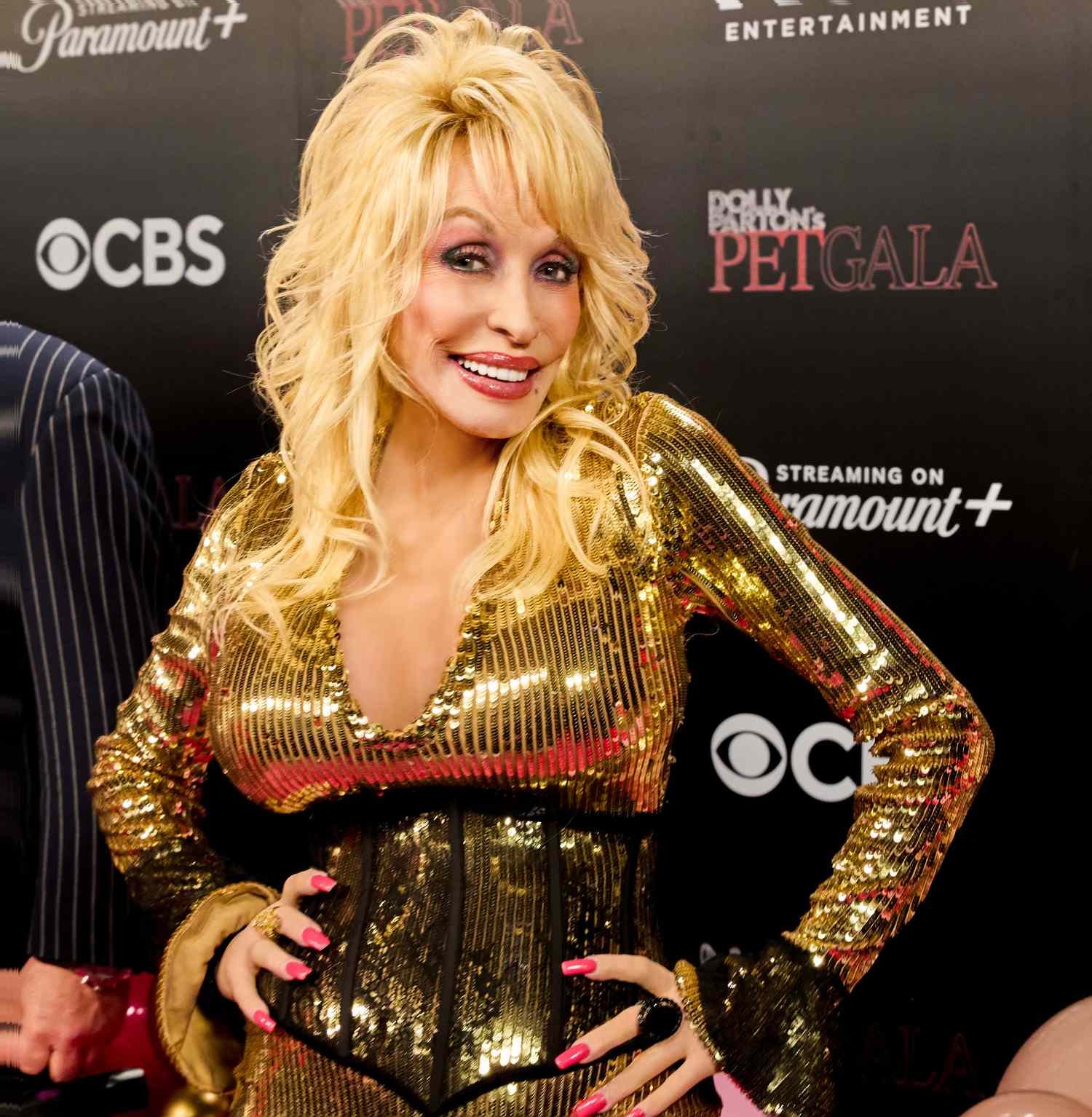
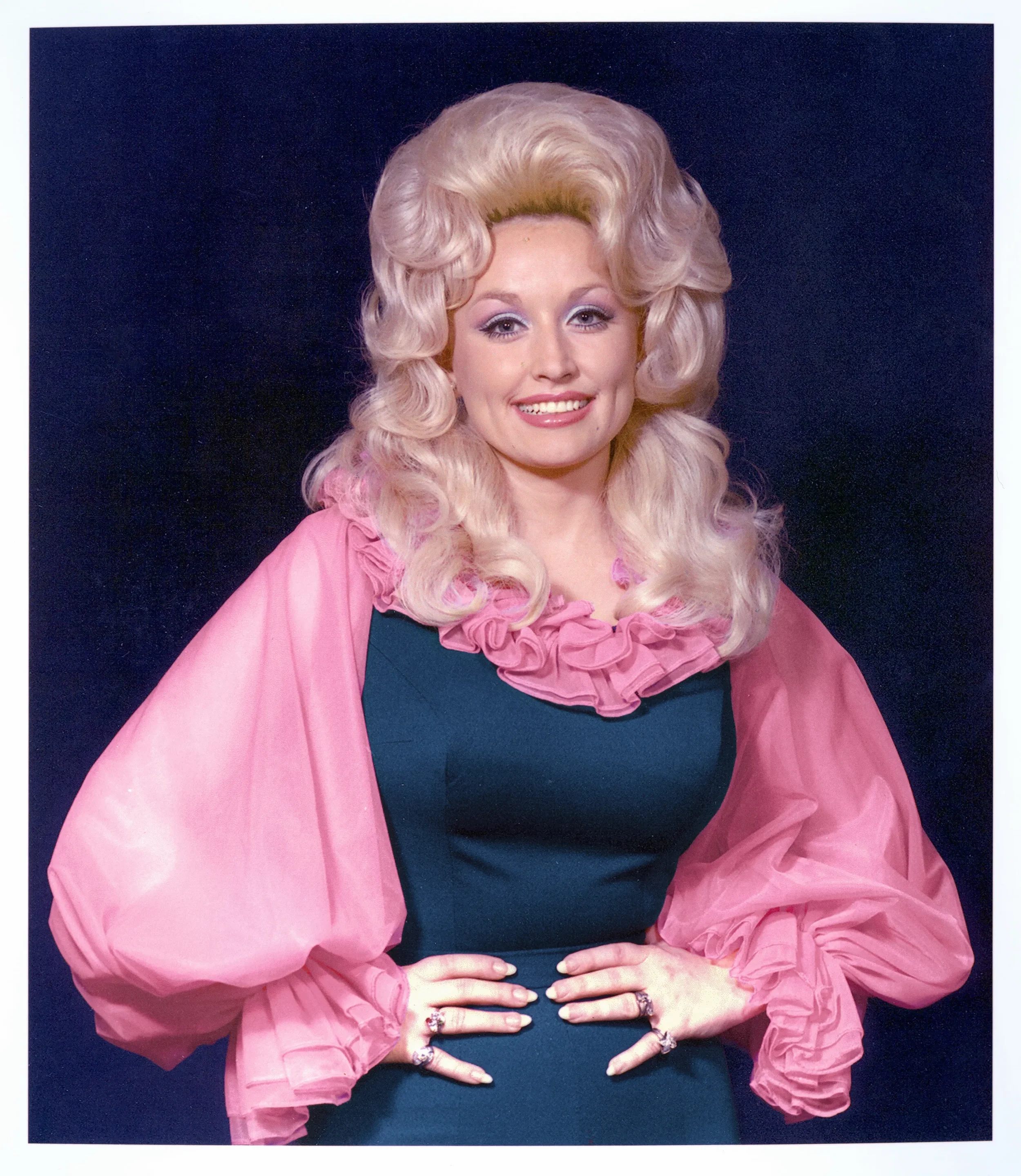
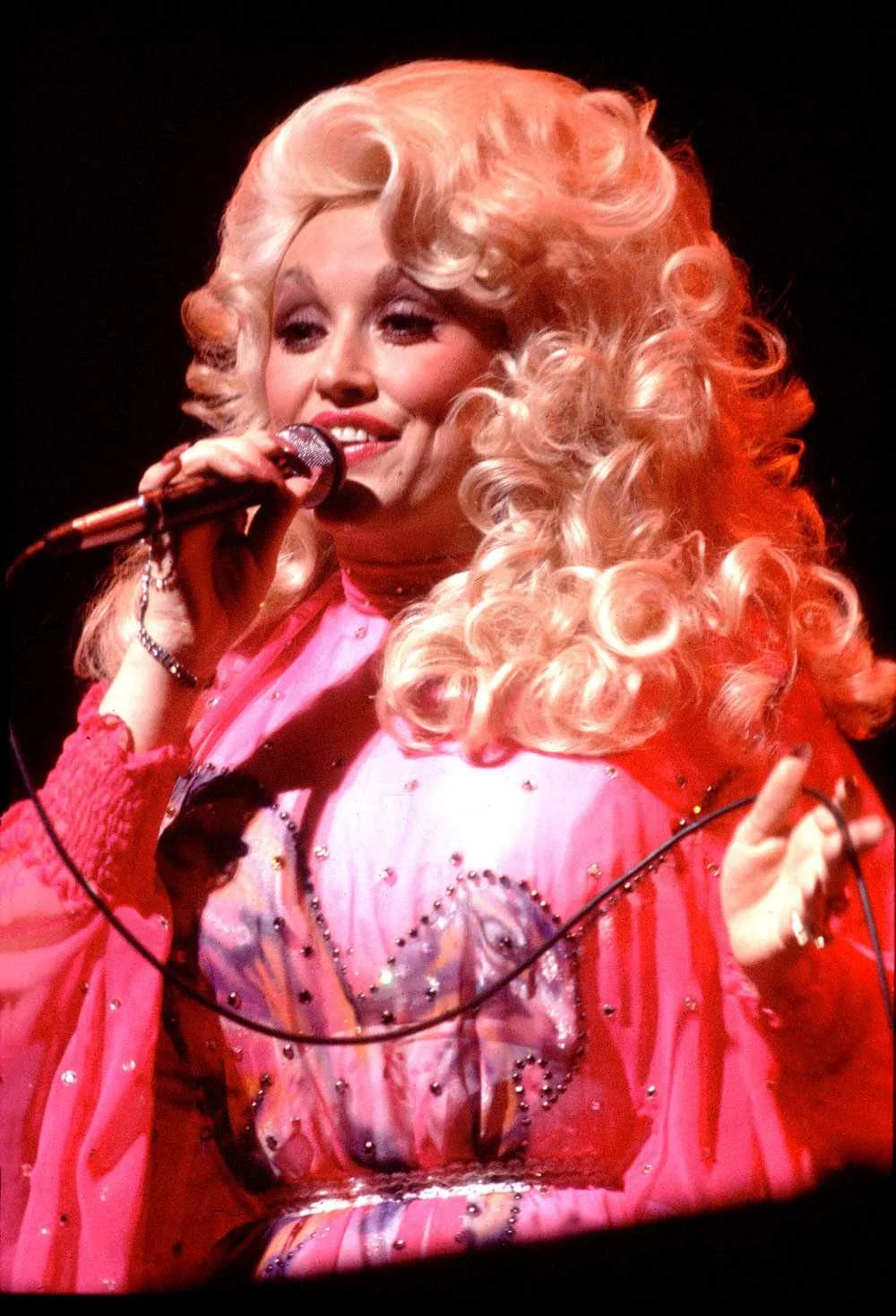
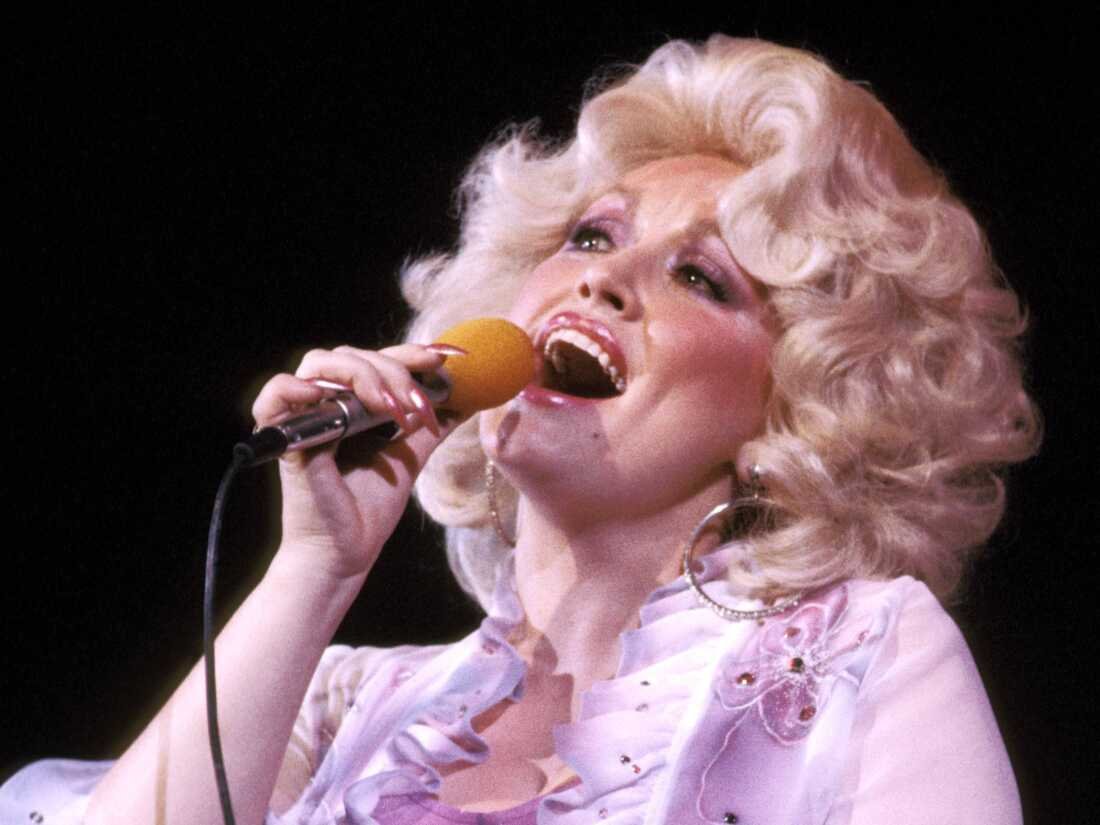
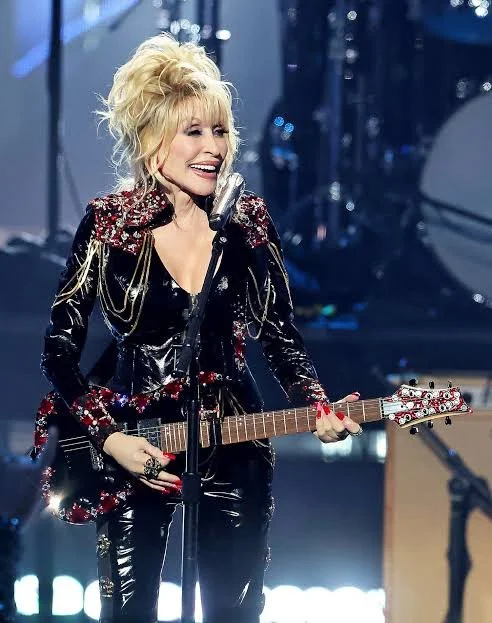
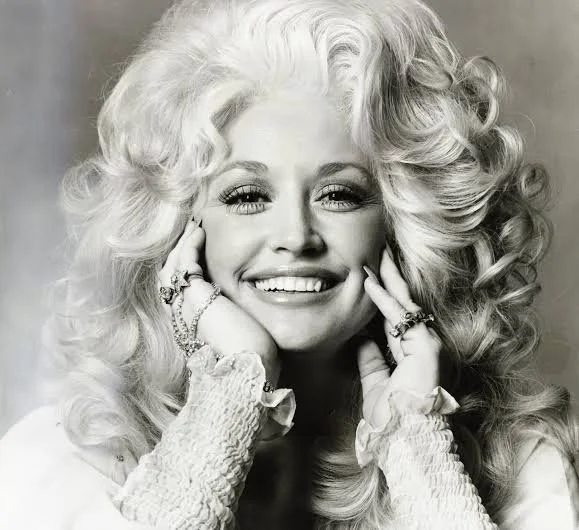
Her hair was too big. Her makeup was too heavy. Her nails were too long. Her clothes were too tight. Her heels were too high. Her breasts were too noticeable. Her femininity was too exaggerated. Her accent was too country. Her entire aesthetic was specifically engineered to make a tasteful person clutch their pearls hard enough to cut off circulation.
And Dolly knew exactly what she was doing.
As a child, she became fascinated by a woman in town whom the adults considered trash. Everybody else saw someone Dolly should not aspire to resemble. Dolly saw glamour. She saw beauty. She saw possibility. And when people told her that woman was trash, Dolly’s reaction was not shame. Dolly said, “Oh. Well, that’s what I’m going to look like.”
That decision became one of the great acts of aesthetic defiance in American popular culture, because as Dolly accumulated wealth and status, she never performed the transformation society generally expects from women who rise out of poverty. She never became tastefully beige. She never traded the rhinestones for understated luxury so that wealthy people would know she belonged among them. She didn’t abandon exaggerated femininity to make people take her intellect seriously.
She made them adjust.
She walked into rooms looking like a human chandelier, and then proceeded to be one of the smartest businesspeople in them. Men underestimated her because of her appearance. She knew they did. And sometimes she let them, because Dolly understood something profoundly important: being underestimated, and being incapable are not the same thing.
Sometimes people showing you exactly how little they expect from you is useful information.
Dolly’s femininity was not evidence that she lacked seriousness. It was evidence that seriousness had never required surrendering femininity in the first place. She could be intelligent and sexual, soft and formidable, funny and shrewd, gaudy and sophisticated, generous and extraordinarily good at business.
She refused the false choice, and in doing so, she gave generations of women permission to question every false choice they had been handed too. Dolly once distilled the whole philosophy into nine words: “Find out who you are, and do it on purpose.”
She did. My God, did she ever.
THE PARABLE OF THE PUBLISHING RIGHTS
At twenty years old, Dolly Parton and her uncle, Bill Owens, founded Owe-Par Publishing Company, with Dolly holding a controlling interest. It was 1966. The country-music industry was overwhelmingly controlled by men, and a twenty-year-old woman from a one-room cabin in Tennessee was setting up a company so she could retain copyright in the songs she wrote.
That decision would eventually produce one of the greatest parables in the entire Dolly canon.
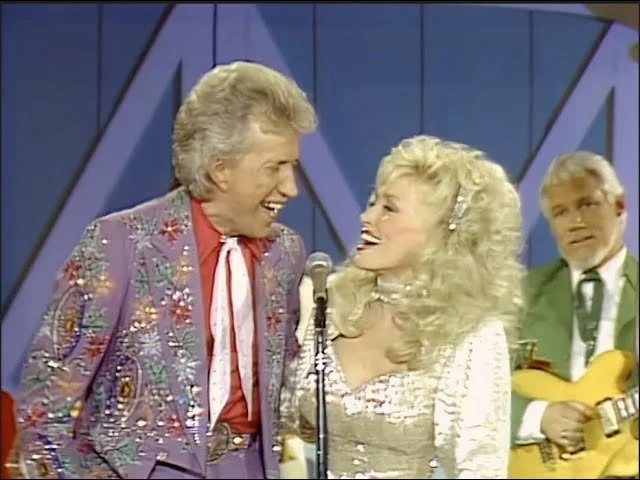
Dolly wrote “I Will Always Love You” in 1973 as a farewell to Porter Wagoner when she decided to leave his television show and pursue her solo career. The song became a hit. Then Elvis Presley wanted to record it.
Dolly was ecstatic. Because Elvis Presley wanting to record your song is not exactly a minor Tuesday afternoon. She was supposed to attend the recording session, but then, the night before, Elvis’s manager, Colonel Tom Parker, informed her of the arrangement: Elvis didn’t record songs unless he received publishing rights. He wanted half.
Dolly said no; and she cried.
That part matters, because we like to tell stories about boundaries as though healthy boundaries feel wonderful. They often don’t. Sometimes knowing your worth feels fucking terrible. Sometimes saying no to something you desperately want is the price of refusing to abandon yourself. Dolly wanted Elvis to record her song. She also knew what the song was worth. So she chose herself.
Elvis never recorded it.
Nearly twenty years later, Whitney Houston did. And then the universe demonstrated why you do not surrender your publishing rights just because a powerful man tells you that’s the cost of admission.
Whitney’s recording became one of the most successful singles in music history. Dolly reportedly earned millions in publishing royalties, and when Dolly first heard Whitney’s version on the radio, she was so overwhelmed by what Whitney had done with her little song that she had to pull the car over.
There was no territorial bullshit. No insistence that the original was superior because it was hers. No resentment that another woman’s voice had become synonymous with something she created. She understood that Whitney had taken the song somewhere Dolly herself never could have taken it.
And she celebrated her for it.
Then Dolly did something even more Dolly. She took a large portion of the money she earned from Whitney’s recording to buy a commercial property in a predominantly Black Nashville neighborhood. She loved that the money generated by Whitney’s voice had gone there. She called it “the house that Whitney built.”
Consider the entire arc. A young woman protects ownership of her work from one of the most powerful men in entertainment. Decades later, a Black woman takes that work and transforms it into something transcendent. The original writer becomes extraordinarily wealthy because she had refused to surrender ownership, and then she deliberately places some of that wealth into a Black community as a tribute to the woman whose voice created it.
That is not merely a charming celebrity anecdote. That is scripture.
Protect what you create. Recognize what someone else can bring to it. Celebrate another person’s greatness without believing it diminishes yours. And once the abundance arrives, let some of it flow outward.
Amen.
THE BOOK OF HARD THINGS SAID BEAUTIFULLY
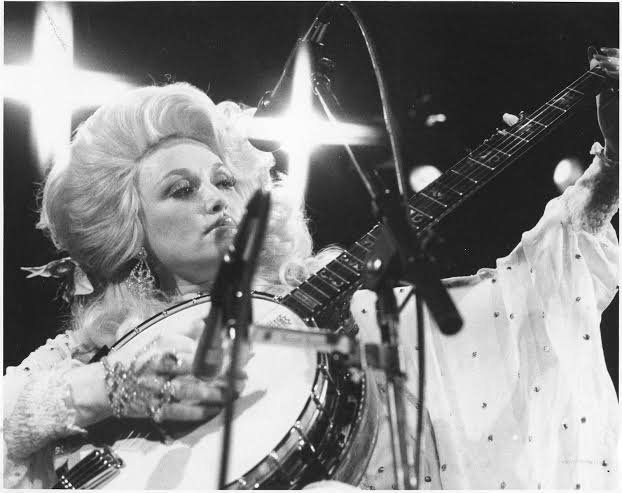
Dolly Parton was not merely a singer; she was a writer, and that distinction mattered enormously to her. She wrote thousands of songs over the course of her life, and underneath the glitter was a songwriter who repeatedly turned toward subjects people preferred not to discuss.
Poverty. Class. Working women. Sexual harassment. Unwanted pregnancy. Abandonment. Judgment. Grief. Jealousy. Family. Shame. Ambition. The desperate need to become something more without learning to hate the person you had been.
She could say things that were painful without making pain ugly. That was one of her greatest gifts.
Dolly understood that sometimes people will reject a truth if you hand it to them like a weapon. So she wrapped truth in melody. She put a beautiful voice around it. She gave it a chorus. She made people hum along. And somewhere around the second verse, people realized: Oh, shit. She’s talking about us.
Her music allowed people to sit beside experiences they might otherwise have judged from a distance. That is art doing what art is supposed to do. Not merely entertaining us.
Expanding us.
THE BOOK OF MY PEOPLE
When Dolly became wealthy, she never seemed to develop that special brand of amnesia that sometimes accompanies success. She remembered poverty. She remembered Appalachia. She remembered Sevier County. She remembered what it felt like when there wasn’t enough.
And when her people needed her, she showed up.
In 2016, catastrophic wildfires tore through the Great Smoky Mountains and devastated communities near where Dolly had grown up. Within forty-eight hours, the Dollywood Foundation established the My People Fund.
The name tells you nearly everything. My people.
Families whose primary residences had become uninhabitable received $1,000 per month for six months. At the final distribution, that last payment became $5,000. Altogether, $8.9 million went directly to wildfire victims.
Not a gala. Not an awareness campaign. Not a celebrity video about how heartbreaking everything was. Money. Into people’s hands. Because when somebody’s house has burned down, awareness is lovely, but they also need to buy some fucking groceries.
Additional money supported recovery efforts and scholarships for students whose homes had been destroyed. Years later, when Hurricane Helene devastated parts of Appalachia in 2024, Dolly personally pledged another $1 million toward relief.
Again: my people.
She had become one of the most famous women in the world. But the possessive pronoun never changed.
THE BOOK OF GIVING A SHIT
Literacy wasn’t Dolly’s only cause. There was medical research, children’s healthcare, education, scholarships, disaster recovery, environmental conservation, and apparently, because God enjoys a subplot, bald eagles.
Dollywood partnered with the American Eagle Foundation to create Eagle Mountain Sanctuary, caring for non-releasable bald eagles and supporting conservation, rehabilitation, and public education.
Yes. Bald eagles. Of course she did. At this point, discovering that Dolly Parton had quietly helped another category of living creature feels less like surprising information and more like unlocking a side quest in an extremely wholesome video game.
She also gave $1 million to Vanderbilt University Medical Center for COVID-19 research in 2020, funding that helped support work associated with Moderna’s vaccine. In 2022, she donated another $1 million to pediatric infectious-disease research. She supported children’s hospitals and medical care. She supported scholarships and educational initiatives. She supported her local community.
So much of what she gave was done without turning every act of generosity into a branding exercise. That distinction is important, because Dolly never seemed to view philanthropy as the decorative moral accessory wealthy people attach to themselves after accumulating enough money. It was stewardship. The money was useful because of what money could do.
Dolly could have spent her life pursuing the largest possible number beside her name. Instead, she seemed to understand that after a certain point, another dollar sitting in your account is considerably less interesting than what that dollar might become in somebody else’s life. A book. Tuition. Medicine. A rebuilt home. A research grant. A scholarship. A bird sanctuary, apparently.
The joke has long circulated that Dolly Parton could have been a billionaire many times over if she had simply kept more of what she earned. Whether anyone could ever calculate that counterfactual precisely is irrelevant. The truth underneath it is what matters.
Dolly understood that there are things more important than being as rich as humanly possible. She never forgot what not having enough felt like, so when she had more than enough, she kept looking around.
THE GOSPEL ACCORDING TO DOLLY’S JESUS
Dolly Parton was deeply Christian, and that matters to this canonization- not because everyone needs to share her theology, but because of what she chose to do with hers. Dolly’s faith did not appear to require a constantly updated spreadsheet of everyone else’s sins. She didn’t seem particularly interested in appointing herself God’s assistant manager.
She repeatedly expressed a much simpler theological position: God can judge people. Her job was to love them. That distinction made Dolly a longstanding and vocal ally of LGBTQ+ people, including at times when doing so was considerably less culturally convenient than it is now. Gay people loved Dolly. Drag queens loved Dolly. Trans people loved Dolly.
And Dolly loved them right back.
When asked about transgender people and legislation affecting them, she returned to the human beings underneath the political argument. She knew queer and trans people. She loved them. She saw how deeply they were hurt by being treated as though their existence were a problem. And she made the theological hierarchy remarkably clear: if judgment is required, that’s God’s department.
Not hers.
There is something almost embarrassingly simple about that, and yet somehow, enormous portions of institutional Christianity have spent centuries developing extremely elaborate methods of avoiding it. Dolly didn’t need to abandon Christianity to accept LGBTQ+ people. Her Christianity was part of why she believed she should accept them.
Everyone was God’s child. God could handle God’s own paperwork. Dolly had shit to do. Books needed mailing.
THE BOOK OF LEARNING BETTER
There is another part of Dolly’s character that deserves canonization precisely because it is so rare. She could learn something, and then change.
Her dinner attraction had once been called the Dixie Stampede. For many people, particularly Black Americans, “Dixie” carried associations with the Confederacy and slavery that made the branding painful.
Dolly explained that she hadn’t originally understood it that way. She had grown up thinking of Dixie simply as another word for the South. Then somebody explained why it hurt; and this is the point where many public figures begin the sacred ritual known as Explaining Why Everyone Else Is Actually Wrong to Be Offended. Dolly didn’t. Her response was essentially: I didn’t know. Now I do. I don’t want to hurt people. So let’s change it.
The attraction became Dolly Parton’s Stampede.
Was business part of the calculation? Absolutely. Dolly openly acknowledged that too. But she also said something far more important: if something she was doing hurt people, she wanted to hear that.
Think about how fucking rare that is. Not: I didn’t intend harm, therefore no harm occurred. But: I didn’t intend harm. Now that I understand the harm, I can do something differently. Intent did not become an escape hatch from accountability. It became the starting point for learning.
That is not weakness. That is maturity.
THE BOOK OF WHO MATTERS
In 2020, as Americans protested racial injustice and the killing of Black people, Dolly was asked about Black Lives Matter. She didn’t require a twelve-person communications team to construct an answer.
Her response was quintessentially Dolly- Of course Black lives matter. Did white people really think they were the only people who mattered?
There it was. A complicated national conversation reduced to the basic human principle underneath it. People want to be seen. People want to matter. People want their lives treated as valuable.
Dolly understood that.
She didn’t have to attend every protest or become a political commentator. She simply refused to pretend that acknowledging somebody else’s humanity somehow diminished her own.
THE BOOK OF CARL
And then there was Carl Dean.
Dolly met Carl outside the Wishy Washy Laundromat in Nashville shortly after arriving in the city. They married in 1966, and remained married until Carl’s death in 2025.
Nearly fifty-nine years. In the entertainment industry. We are comfortable classifying this as at least a minor miracle.
What makes their marriage particularly delightful in Dolly lore is how spectacularly uninterested Carl seemed to be in participating in the machinery of celebrity. His wife became one of the most famous human beings alive, and Carl apparently remained committed to the general philosophy of: Wonderful. Have fun. I’ll be elsewhere.
Dolly could belong to the world without having to surrender every piece of her private life to it. Carl knew Dolly before the mythology. Before Dollywood. Before the Grammys. Before the rhinestone empire. Before millions of strangers felt as though she belonged partly to them. There was still somebody at home who knew the woman underneath all of it.
He died the year before she did. And after almost six decades of marriage, Dolly had to learn how to inhabit a world without him. That grief became one of the final transformations of her life, because Dolly Parton, for all the mythology around her, was never immune to being human.
THE BOOK OF THE CHILDREN SHE DIDN’T HAVE
Dolly didn’t have biological children, and we will be careful here, because there is a particularly cruel cultural tendency to turn a woman’s reproductive life into public property.
Dolly spoke about her own experience, so we can honor what she chose to share.
She lived with endometriosis and eventually underwent a partial hysterectomy. She had once imagined children as part of her life. That life did not happen, and she experienced profound emotional pain during that period.
There is a cheap way to tell this story. It goes: everything happens for a reason. She couldn’t have children, so she helped millions of children instead. Isn’t that beautiful? No. We’re not doing that. Because pain doesn’t become good just because somebody eventually builds something beautiful around it. Loss is still loss. Grief does not owe us a silver lining.
Dolly didn’t need to be grateful for the things that hurt her in order to decide what she would do afterward. That is what makes the transformation meaningful. Eventually, Dolly came to a way of understanding her life that brought her peace; she once explained that perhaps God hadn’t intended for her to have children because everybody’s children could be hers.
And then she lived like she meant it.
Millions of children received books because of Dolly Parton. Children received scholarships. Children received medical care supported by her generosity. Children whose homes burned down received help. She and Carl also helped raise younger siblings.
She became Aunt Granny. She loved children who did not carry her DNA. Dolly Parton did not have biological children.
And somehow, we were all her children.
THE BOOK OF SCARS AND BUTTERFLIES
Dolly loved butterflies. They appeared throughout her work, her businesses, and her visual identity.
The butterfly truly does feel almost suspiciously perfect as a symbol for Dolly Parton. Transformation without erasure. Beauty without apology. Delicacy that does not mean weakness. Freedom. Movement. Something that becomes more visibly itself through change.
Dolly even had butterfly tattoos. Some of her tattoos, she explained, were used to cover scars.
And there, almost accidentally, is the entire theology again. A scar existed. She didn’t pretend it wasn’t there, she didn’t need to be ashamed of it, she just put something beautiful over it; not to erase what happened, but to reclaim what remained. That may be the clearest metaphor for Dolly’s entire life.
She took everything the world might have told her to hide- the poverty, the accent, the femininity, the scars, the heartbreak- and covered it in rhinestones until the rest of us understood it was beautiful.
She turned poverty into generosity. Her father’s illiteracy into books. Sexism into ownership. Being called trashy into an aesthetic empire. Heartbreak into music. Grief into tenderness. Success into opportunity. Faith into love. Scars into butterflies.
She turned pain into something useful without ever requiring us to pretend the pain itself had been a gift.
THE CANON OF DOLLY
And so, with the death of Dolly Rebecca Parton, The First Church of Heaux formally enters the following principles into the canon:
Find out who you are, and do it on purpose.
Own what you create. Know what you’re worth before somebody powerful offers to tell you. Never confuse being underestimated with being incapable. Never confuse humility with making yourself smaller. You do not need to become less feminine to become more formidable. You do not need to become hard to become powerful. You do not need to become cruel to become successful.
Remember where you came from without believing you are obligated to remain there. If you escape the drought, send water back. If you have more than you need, look around. If you discover that something you’re doing hurts people, listen. Intent matters. Impact does too. Learning is not humiliation. Changing your mind is not weakness.
Faith should make your capacity for love larger, not smaller. God does not require your assistance judging everybody. Other people’s brilliance does not diminish yours. Whitney can sing your song better than you ever imagined, and you can pull the fucking car over, and marvel at her.
Boundaries can break your heart, and still be the right boundaries.
Do not sell Elvis half your publishing.
Children deserve books. People who have lost their homes need money more than they need inspirational Instagram graphics. Your scars are not shameful. Your accent is not shameful. Your poverty is not shameful. Your femininity is not shameful. Your softness is not shameful. Your body is not shameful.
Being “too much” is sometimes simply what people call a woman who has declined their invitation to become less.
Love your people. Help your people. And understand that, if your heart is big enough, your people can become everybody.
Also: When in doubt, add rhinestones.
THE OFFICIAL CANONIZATION
There is no human being who has ever been genuinely universally loved. Human beings cannot unanimously agree on pizza toppings. We cannot agree on whether the toilet paper goes over or under. We have started wars over substantially less.
There is no celebrity, politician, religious leader, artist, or historical figure who is universally revered.
There was Dolly.
Not literally universally loved, because humanity remains humanity. But your Reverend and writer cannot think of a single person, alive or dead who did not love Dolly.
Country singers love Dolly. Rock stars love Dolly. Pop stars love Dolly. Grandmothers love Dolly. Children love Dolly. Drag queens love Dolly. Church ladies love Dolly. Queer people love Dolly. Appalachia loves Dolly. Hollywood loves Dolly. Working-class people saw themselves in Dolly. Rich people wanted to sit beside Dolly. People of faith love her. People wounded by faith love her.
People who could not agree about almost anything else could somehow look across the cultural divide and say: Okay, but Dolly’s good people.
That may be one of the most extraordinary accomplishments of her life. She did not achieve it by having no convictions, she achieved it by possessing convictions without requiring cruelty. She demonstrated that you could have faith without weaponizing it. Wealth without worshipping it. Ambition without forgetting where you came from. Femininity without apology. Boundaries without bitterness. Confidence without arrogance. Power without requiring somebody else’s diminishment. Tradition without refusing to learn. Humor without punching down. And success without pulling the ladder up behind you.
That is why The First Church of Heaux has spent years calling Dolly Parton our lord and savior.
Yes, it was funny. Of course it was funny. This is a woman who once built an international brand around looking like the town tramp and then became a literacy philanthropist, business titan, and bald-eagle benefactor while wearing enough rhinestones to interfere with nearby radar equipment.
She understood the bit. We feel confident she would permit us ours.
Underneath the joke was always something sacred. We weren’t worshipping celebrity, we were revering what she represented.
A person can come from very little, and refuse to become ashamed of it. A woman can be sexual, feminine, glamorous, and ridiculous, and still be the smartest person at the negotiating table. You can protect what belongs to you without becoming selfish. You can become extraordinarily successful without believing success makes you more valuable than the person you used to be.
You can survive pain without making pain your personality. You can practice faith without using God as a weapon. You can disagree with people, and still recognize their humanity. You can learn. You can change. You can give. You can be soft. You can be funny. You can be fucking fabulous.
And perhaps most importantly: You can use whatever freedom, money, influence, power, or healing you manage to acquire to make it a little easier for somebody else to become free too.
That is the Gospel According to Dolly.
Dolly Parton left behind songs that will continue playing long after all of us are gone, but she also left books- hundreds of millions of them. She left children who learned to read. She left students who went to school. She left families who rebuilt after losing everything. She left research that continued after the check cleared. She left communities into which she deliberately poured money.
She left artists who learned from her example that ownership matters. She left women who understood that intelligence did not require making themselves aesthetically respectable. She left queer people who heard a deeply Christian woman tell them that they were God’s children too. She left people from poor little towns who could point toward the biggest stages in the world and say: someone from a place like mine got there without pretending she’d never been here.
She left butterflies. She left rhinestones. She left stories. She left laughter. She left “Jolene.” She left “Coat of Many Colors.” She left “9 to 5.” She left “I Will Always Love You.” She left an entire philosophy hidden underneath the wigs and one-liners: Know yourself. Own yourself. Love people. Give freely. Stay curious. Stay kind. Don’t let anybody shame you into becoming smaller.
And for the love of God, keep your publishing rights.
So as of August 25, 2026, The First Church of Heaux lowers its rhinestone-encrusted flags to half-mast. We light the ceremonial candles. We apply the ceremonial lip gloss. We tease the ceremonial wig until it poses a legitimate fire-code concern.
And we officially canonize Dolly Rebecca Parton:
Patron Saint of Too Much. Our Lady of the Imagination Library. Protector of Publishing Rights. Mother of Rhinestones. Keeper of the Butterflies. Defender of the Queers. Benefactor of Children. Friend of Appalachia. Guardian of Bald Eagles. She Who Told Elvis No. She Who Told Whitney Yes. She Who Knew That Enough Was Enough- and Asked Who Else Needed Some.
And, forever and always:
Our Lord and Savior, Dolly Parton.
Thank you, Dolly. For the music. For the books. For the mountains. For the butterflies. For the big hair, and bigger heart. For the uncomfortable truths hidden inside beautiful melodies. For refusing to make yourself smaller just because other people found your abundance inconvenient.
Thank you for showing us that softness could be powerful. That femininity could be formidable. That faith could look like love. That boundaries could coexist with generosity. That you could remember where you came from without allowing where you came from to dictate where you were allowed to go.
Thank you for showing us that success means very little if none of it ever reaches anybody besides yourself. And thank you for demonstrating, over and over again, that when the world hands you something ugly, you are allowed to grieve it. You are allowed to be angry about it. You are allowed to carry the scar.
But eventually, if you choose, you might make something beautiful around it. Maybe a song. Maybe a book. Maybe 304 million books. Maybe a scholarship. Maybe a home. Maybe a butterfly. Maybe just enough kindness that the next person doesn’t have to hurt quite as much as you did. The books will keep arriving. The songs will keep playing. The stories will keep being told. The children will grow up. The mountains will remember her.
And somewhere, for as long as there are people who have been told they are too poor, too country, too feminine, too queer, too loud, too scarred, too strange, or simply too much, there will be a five-foot-tall blonde woman covered in rhinestones standing permanently in our cultural memory, reminding them:
Figure out who you are, then do it on purpose.
Our lord and savior has gone home.
But God, did she leave this place prettier than she found it